Not every fence does the same job. Some are built to look good from the street. Others are built to keep people out, block unwanted sightlines, or give your family a yard that feels truly private. If privacy and security are your main goals, the style of fence you choose matters more than most homeowners realize.
A fence that looks solid from a distance may still have gaps that allow visibility from certain angles. A fence that feels secure may have weak points at the gate or base that undermine the whole setup. Choosing the right style means understanding exactly what each option delivers and where it falls short.
For homeowners in North Richland Hills, TX, where lot sizes and neighborhood layouts vary widely, finding the right balance between privacy, security, and appearance is a real and practical challenge. That is true whether you are evaluating a fence replacement or choosing a style for the very first time.
What Makes a Fence Truly Private?
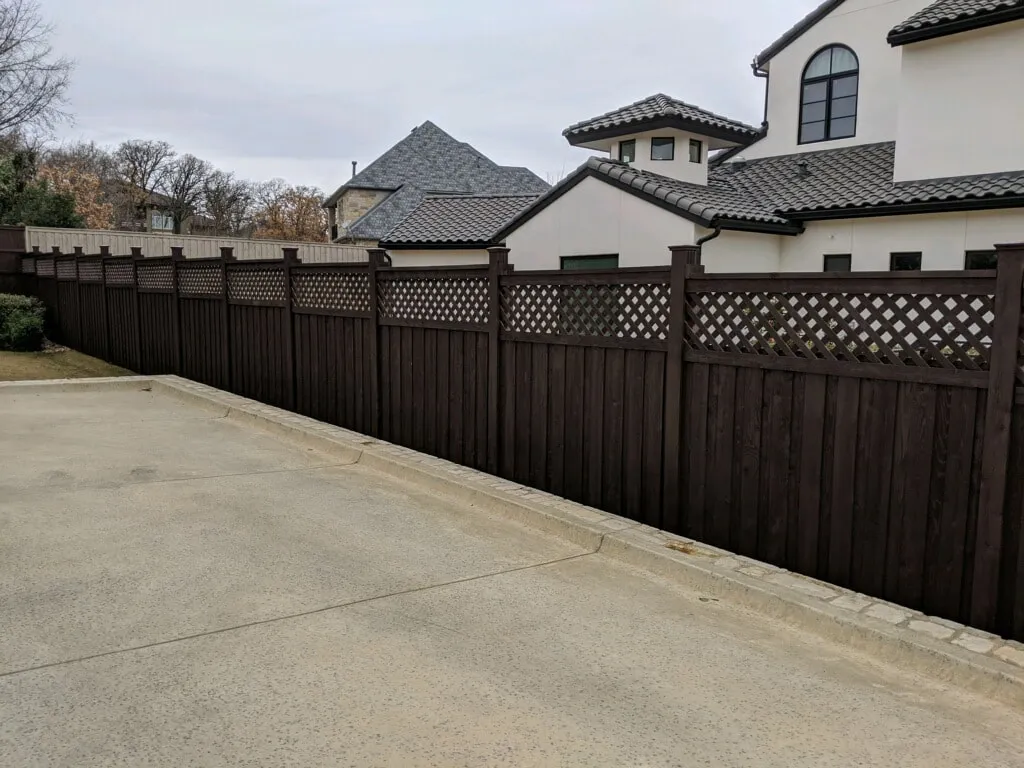
Privacy in fencing comes down to two things: height and visibility. A fence that is tall enough to block sightlines from the street and neighboring properties, and solid enough that there are no gaps to see through, is a privacy fence in the truest sense. Not all fences marketed as privacy fences actually deliver both of those things consistently.
Height alone is not enough. A six-foot fence with gaps between the boards still allows visibility from certain angles, especially on uneven terrain. Solid panel construction, tight board placement, or overlapping designs are what actually eliminate sightlines.
Before choosing a style, it helps to understand the full range of options available to you. Our guide on What Are the Different Fence Styles? breaks down every major residential fence type, including which ones are best suited for solid coverage.
Solid Wood Privacy Fences: The Most Common Choice
Solid wood privacy fences are the most widely used option for homeowners who want full coverage. When installed correctly, a six to eight-foot wood fence with tightly fitted boards creates a genuine visual barrier on all sides. There are no gaps, no sightlines, and no way to see into the yard from ground level.
Dog-Ear Privacy Fence
This is the standard privacy fence style where boards are cut with a slight angle at the top. It is straightforward, cost-effective, and delivers solid coverage. The clean top line gives it a finished appearance that works in most residential settings.
Shadowbox Fence
The shadowbox design alternates boards on either side of the rail, creating a woven appearance. It allows some air circulation while still blocking direct sightlines. It is a good option for homeowners who want privacy without the completely solid look of a flat panel fence.
Things to check with wood privacy fences:
- Inspect boards at the base for rot or ground contact that allows moisture to travel up the wood
- Check that all boards are still flush with no gaps that have developed from warping or shrinkage
- Look at the top rail and posts for signs of structural weakness that could cause sections to lean or fall
Vinyl Privacy Fences: Solid Coverage with Less Upkeep
Vinyl privacy fences offer the same solid panel coverage as wood but without the ongoing maintenance demands. The panels are manufactured in continuous sections with no gaps between boards, which makes them one of the most consistently private options available.
In North Richland Hills, TX, where summer heat and UV exposure are constant concerns, vinyl holds up better than untreated wood over time. It does not dry out, crack from heat exposure, or require periodic sealing to maintain its integrity.
Full Privacy Vinyl Panel
This is the solid tongue-and-groove panel style that leaves no gaps. It is the most effective vinyl option for complete visual privacy and is available in heights up to eight feet in most markets.
Vinyl with Lattice Topper
Some homeowners choose a solid vinyl panel base with a decorative lattice section added to the top. This adds height and a design element while still maintaining privacy at eye level and below.
Things to check with vinyl privacy fences:
- Inspect panel seams and tongue-and-groove connections for any separation caused by ground movement
- Check post depth and anchoring, especially after periods of heavy rain that can shift or loosen the base
- Look for any impact damage to panels, vinyl can crack under sharp or sudden force, even though it handles weather well
Wrought Iron and Aluminum Fences: Security Without Full Privacy
Metal fences are among the strongest residential options available. Wrought iron and aluminum both offer serious structural security, but neither provides visual privacy. The open picket design means sightlines are fully maintained from both directions. If security is the goal and privacy is secondary, metal fences are an excellent choice.
The height and pointed finials on wrought iron and aluminum fences create a strong visual deterrent. Combined with a locked gate, these fences make unauthorized entry significantly more difficult than most other residential styles.
Wrought Iron with Spear Tops
The classic pointed-top wrought iron fence is designed to discourage climbing. The vertical pickets are spaced closely enough to prevent easy access, and the spear tops add an additional deterrent. This style is commonly used for front yard perimeters and formal property boundaries.
Aluminum Security Fence
Aluminum fences in taller heights, typically five to six feet, provide a strong security barrier without the maintenance requirements of wrought iron. They are powder coated for weather resistance and come in styles that closely mimic traditional wrought iron.
Things to check with metal security fences:
- Inspect all welds and connection points on wrought iron for rust or cracking that weakens structural integrity
- Check gate hardware including hinges, latches, and locks for wear or misalignment
- Look for bent or spread pickets that may have occurred from impact and now create accessible gaps
For broader guidance on residential security measures and how fencing fits into an overall home safety plan, the Crime Prevention Through Environmental Design guidelines from the National Crime Prevention Council offer practical and trusted information.
Chain Link Fences: Functional Security on a Practical Budget
Chain link fences are not known for privacy, but they deliver consistent and reliable security at a lower average cost than most other materials. They define the boundary clearly, contain children and pets, and create a physical barrier that requires real effort to get through or over.
For homeowners who need security without the budget for wrought iron or the desire for full visual coverage, chain link is a straightforward and effective solution. Adding privacy slats woven through the chain link can increase visual coverage without replacing the entire fence.
Things to check with chain link security fences:
- Inspect the bottom tension wire to make sure it has not sagged and created a gap at the ground level
- Check all post anchors and top rail connections for any loosening that reduces overall fence stability
- Look at the gate latch and lock mechanism since this is typically the weakest point on a chain link perimeter
Concrete and Masonry Walls: The Highest Level of Both
For homeowners who want maximum privacy and security in a single solution, concrete or masonry walls deliver both without compromise. A solid concrete block or brick wall at six feet or taller eliminates all visibility and creates a barrier that is extremely difficult to breach.
The trade-off is cost and permanence. Masonry walls are among the most expensive fencing options and require significant installation time. However, once in place, they require very little maintenance and last for decades. In upscale neighborhoods in North Richland Hills, TX, masonry walls are sometimes used along rear property lines where privacy is most important.
Things to check with concrete and masonry walls:
- Inspect mortar joints annually for cracking or crumbling, especially after periods of significant temperature change
- Check the base of the wall for any signs of soil erosion or shifting that could affect structural stability
- Look for efflorescence or staining on the surface, which can indicate moisture movement through the wall
If you are weighing masonry walls against other high-security options, Family Handyman’s fence resource breaks down the practical differences in installation, durability, and long-term performance.
Gate Design Is Part of the Security Equation

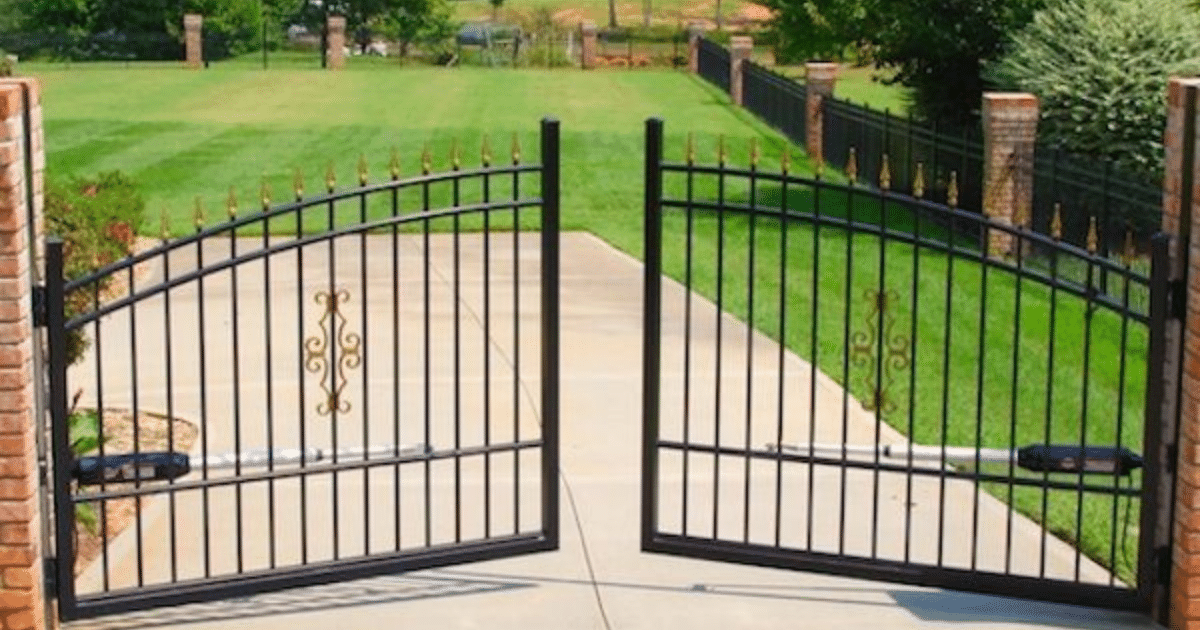
A strong fence with a weak gate is still a weak perimeter. The gate is the most frequently used part of any fence, which also makes it the most likely point of failure over time. Hinges loosen, latches wear down, and frames can shift out of alignment. For a fence to perform its security function effectively, the gate needs to match the strength and design of the rest of the fence.
Double Gates for Vehicle Access
If your fence includes a driveway gate, double gates need to be anchored and aligned carefully. Heavy gates that are not properly supported will sag over time and create gaps at the center point where the two panels meet.
Pedestrian Gate Locks
Walk-through gates should have a locking mechanism that cannot be reached from the outside. Keyed locks, combination locks, or bolt latches mounted on the interior side of the gate all improve security significantly over standard gravity latches.
Things to check on fence gates:
- Inspect hinge screws and bolts for tightening at least once a year, weight and use cause them to loosen gradually
- Check the latch mechanism to make sure it engages fully and cannot be pushed open from outside pressure
- Look at the gap between the gate and the post on both sides to confirm alignment has not shifted
Your fence choice also plays a direct role in how your property looks from the street. If you want to understand how privacy and security fencing affects your home’s overall appearance, our guide on Why Your Fence Style Affects Your Home’s Curb Appeal covers the visual side of the same decision.
Combining Privacy and Security: What Actually Works
The most effective approach for homeowners who want both privacy and security is to combine the right fence style with smart gate choices and proper installation depth. No single fence style does everything perfectly, but a tall solid wood or vinyl fence with a reinforced gate and deep post anchoring comes close.
Height matters. In most Texas municipalities, residential fences can go up to six feet in the backyard without a permit, though that varies. Going taller adds both privacy and security but may require additional approval. Checking local guidelines in North Richland Hills, TX before installation protects your investment and avoids complications later.
Things to check when combining privacy and security goals:
- Inspect whether your current or planned fence height genuinely blocks sightlines from all neighboring angles, not just the street
- Check that post depth meets or exceeds the standard one-third rule, where posts are buried to at least one-third of their total length
- Look at every access point, including gates, gaps at corners, and areas near trees or structures that could allow someone to bypass the fence
If your current fence is showing signs of wear that compromise both its privacy and security function, knowing when to replace it is the next step. Our guide on When Is the Right Time to Replace or Upgrade Your Fence? helps you identify when repair is no longer enough.
Protect What Matters with the Right Fence for the Job

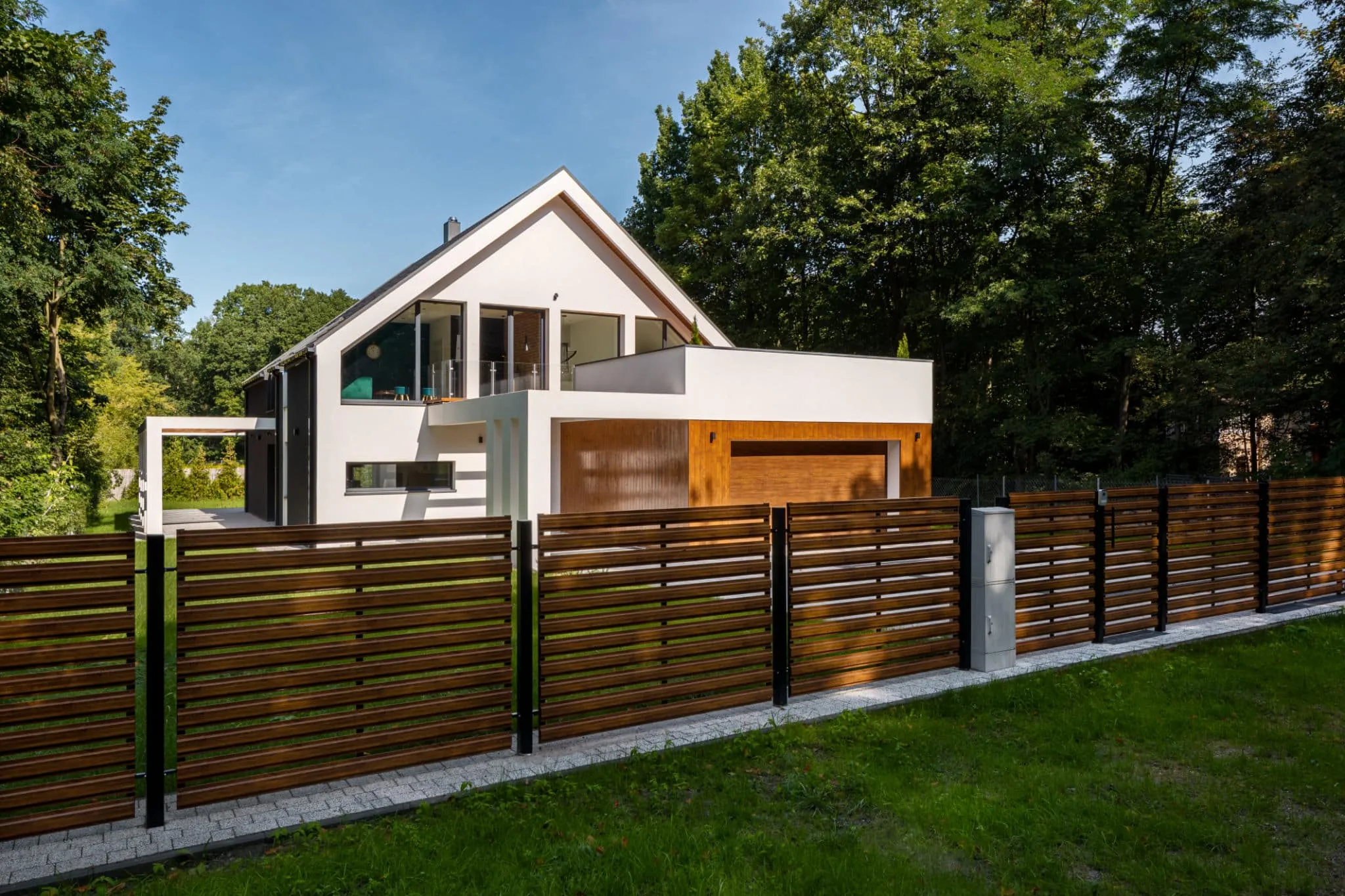
Privacy and security are not interchangeable goals, but the right fence style can deliver both when chosen and installed correctly. Solid wood and vinyl fences are your best options for true visual privacy. Wrought iron and aluminum provide strength and deterrence. Masonry walls offer the most complete solution when budget allows. The key is matching the fence to what you actually need, not just what looks good in a catalog.
If you are ready to upgrade your fence for better privacy or security in North Richland Hills, TX, North Texas Home Exteriors can help you find the right fit. Our team has the hands-on experience to assess your yard and recommend a solution that works. Contact us or give us a call to get started on a fence that gives you real peace of mind.