Most homeowners do not plan their roof replacement in advance. It usually starts with a leak, a bad storm, or a contractor pointing out damage during an unrelated visit. But waiting for a crisis to make a roofing decision often means less time to weigh your options and more pressure to choose quickly.
If you have an asphalt shingle roof and have been wondering whether now is the right time to upgrade to metal, you are not alone. For homeowners in North Richland Hills, TX, where summer heat, hailstorms, and severe weather are regular occurrences, that question comes up often. This guide walks you through the specific signs, situations, and timing factors that signal it may be time to make the switch.
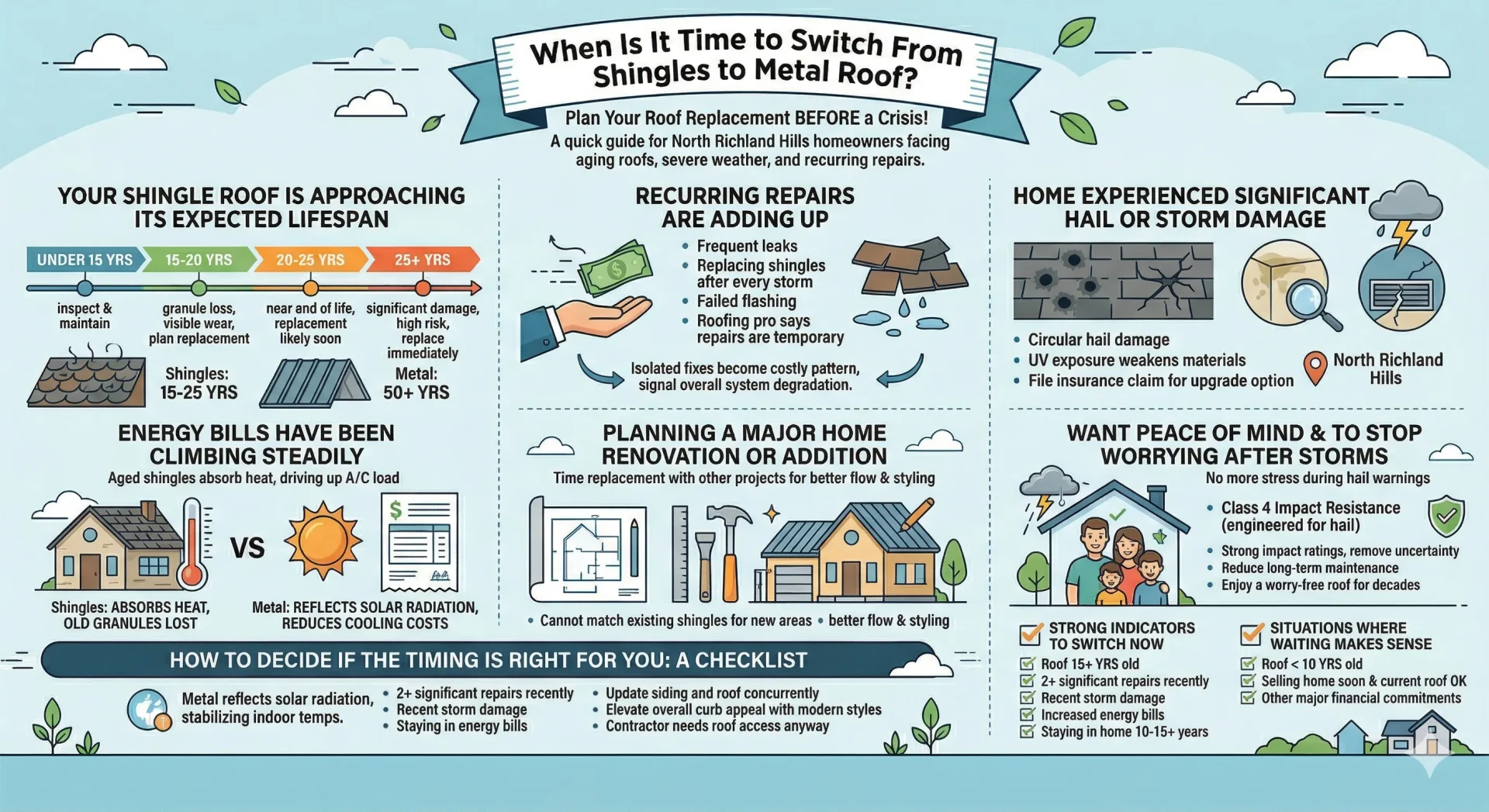
Your Shingle Roof Is Approaching or Past Its Expected Lifespan
The most straightforward trigger for switching to metal is age. Asphalt shingles have a finite service life, and once a roof reaches or exceeds that window, repairs become less cost-effective, and replacement becomes the smarter move.
Here is what to consider based on your roof’s age:
- Under 15 years old: Unless there is significant storm damage, your shingle roof likely has useful life remaining. Focus on regular inspections and preventive maintenance.
- 15 to 20 years old: This is the window where wear starts becoming visible. Granule loss, minor curling, and more frequent repairs are common. Start planning your replacement and consider whether metal is the right upgrade.
- 20 to 25 years old: At this stage, a shingle roof is operating near or past its expected lifespan in a demanding climate like North Texas. Replacement is likely not far off.
- 25 years or older: A shingle roof in this range in North Richland Hills has likely been through multiple hail events, extreme heat cycles, and significant UV exposure. If it has not already been replaced, it almost certainly needs to be evaluated seriously.
To understand how the lifespan of each material compares in detail, What to Expect From Metal vs. Shingle Roof Lifespan provides a thorough breakdown of what each roofing option delivers over time.
You Are Dealing With Recurring Repairs That Keep Adding Up
One of the clearest signals that a shingle roof is reaching the end of its useful life is when repairs start happening more frequently. A single repair every few years is normal. But when you find yourself calling a roofing professional every season, the roof is telling you something important.
Signs that repairs are becoming a pattern:
- The same areas of your roof keep leaking even after being addressed
- You are replacing shingles in multiple spots after every storm
- Flashing around chimneys, skylights, or vents keeps failing
- The underlayment has been compromised in more than one area
- Your roofing professional has told you that repairs are becoming a temporary solution
Recurring repairs are not just a financial drain. They are also a sign that the overall system is degrading, not just isolated sections. At that point, continuing to repair a shingle roof rather than replacing it with a more durable material often costs more in the long run.
Your Home Has Experienced Significant Hail or Storm Damage
North Richland Hills sits in a region that sees some of the most active hail and severe weather in the country. A single significant hail event can take years off the remaining lifespan of an asphalt shingle roof, even when the damage is not immediately visible from the ground.
What storm damage looks like on a shingle roof:
- Dark circular impact marks where hail has struck the surface
- Concentrated granule loss in specific areas rather than uniform aging
- Cracked, split, or bruised shingles that feel soft when pressed
- Damaged or bent flashing around roof penetrations
- Water stains on interior ceilings or walls after heavy rain
After a major storm, many homeowners in North Richland Hills choose to file an insurance claim for shingle damage and use that opportunity to upgrade to a metal roof rather than replace like-for-like. Understanding how to file a roof damage insurance claim can help you navigate the process and explore whether an upgrade is covered or partially covered under your policy.
Why storm events are a natural transition point:
- Insurance proceeds can offset a portion of the upgrade cost
- A new metal roof installed after storm damage starts fresh with a full warranty
- You avoid the cycle of repeated storm damage and repeated shingle replacement
Your Energy Bills Have Been Climbing Without a Clear Reason
If your cooling costs have been rising steadily during North Texas summers and your HVAC system checks out fine, your roof may be contributing to the problem. As asphalt shingles age, they lose efficiency. The granule surface that originally helped reflect some heat wears away, and the bare asphalt absorbs more solar radiation, driving up attic temperatures and increasing the load on your air conditioning system.
Indicators that your roof may be affecting energy efficiency:
- Noticeably higher electric bills during the summer months compared to previous years
- Attic temperatures that feel significantly hotter than the rest of the house
- Air conditioning is running longer cycles without adequately cooling the home
- Uneven temperatures between rooms, particularly on upper floors
Switching to a metal roof in this situation addresses the problem at its source. Metal reflects solar radiation naturally, which reduces heat transfer into the home and helps stabilize indoor temperatures. For homeowners in a climate like North Richland Hills, where summers stretch for months, that difference in energy performance is felt every month on the utility bill.
According to the U.S. Department of Energy’s guidance on cool roofs, reflective roofing materials like metal can significantly reduce heat gain and improve overall energy efficiency in hot climates.
You Are Planning a Major Home Renovation or Addition
If you are already planning a significant renovation, such as adding a room, updating the exterior, or making structural changes, timing your roof replacement alongside those projects is a practical decision. Doing both at once can reduce overall labor costs, minimize disruption to your household, and ensure the new roofing material complements the updated look of your home.
Scenarios where combining projects makes sense:
- You are adding a room or extending your roofline, and the existing shingles cannot be matched properly
- You are updating your siding or exterior and want a roofing material that elevates the overall curb appeal
- Your contractor has identified that the existing roof structure will need to be accessed during the renovation anyway
- You are planning to refinance or sell your home and want the exterior to reflect a higher value
Metal roofing comes in a wide range of styles and colors, which makes it easier to align with updated exterior designs. Whether your home leans traditional or modern, there are metal roofing options that integrate well with most architectural styles found throughout North Richland Hills neighborhoods.
When comparing options during a renovation, roofing material lifespan and design options can help guide your decision.
You Want to Stop Worrying About Your Roof After Every Storm
There is a practical, quality-of-life reason that many homeowners give for switching to metal that does not show up in a cost analysis. They are simply tired of worrying about their roof every time a storm rolls through.
With an aging shingle roof, every hail warning or severe thunderstorm brings a level of stress. Will it hold? Did the last storm cause damage that has not shown up yet? Is that water stain from last month getting worse?
A properly installed metal roof with a strong impact resistance rating removes most of that uncertainty. Class 4 impact-rated metal roofing is engineered specifically for hail-prone regions, and homeowners who make the switch often describe the peace of mind as one of the most underrated benefits of the upgrade.
This factor matters most for homeowners who:
- Have filed multiple roofing insurance claims in recent years
- Live in areas of North Richland Hills that have experienced repeated hail events
- Are approaching retirement and want to reduce home maintenance demands
- Simply want a roof they do not have to think about for the next several decades
For a full comparison of both materials before making your final decision, Shingle Roof vs. Metal Roof: Which Is Best for Your Home? covers every major factor side by side.
How to Decide If the Timing Is Right for You
Not every homeowner is in the same situation, and switching to metal is not always the immediate right move. Here is a practical checklist to help you assess where you stand.
Strong indicators that now is the right time to switch:
- Your shingle roof is 15 years old or more
- You have had two or more significant repairs in the past three years
- You recently experienced a major storm event and are already facing a replacement
- Your energy bills have increased, and your HVAC system is not the cause
- You plan to stay in your home for at least 10 to 15 more years
Situations where waiting may make more sense:
- Your shingle roof is less than 10 years old and in good condition
- You are planning to sell your home within the next few years, and the current roof is acceptable to buyers
- You are in the middle of other major financial commitments that make a larger roofing investment difficult right now
And if the financial side of the upgrade is your primary concern, Is a Metal Roof Worth the Cost Over Shingles? gives you a clear look at the long-term return on that investment.
The Right Time Is When You Are Ready and Informed
Switching from shingles to metal is not a decision that needs to be rushed, but it also should not be delayed past the point where your current roof is costing you more than it should. The homeowners who get the most out of a metal roof upgrade are the ones who plan ahead, understand what they are getting, and make the move before a crisis forces their hand.
When you are ready to have an honest conversation about the condition of your current roof and whether a switch to metal makes sense for your home, North Texas Home Exteriors is here to help. Our team serves homeowners throughout the North Richland Hills area with thorough roof inspections, straightforward recommendations, and quality installations built for Texas weather. Contact us or give us a call, and let us help you make the right call for your home.