Most homeowners do not think much about their roof until something goes wrong. But whether you are dealing with storm damage, aging materials, or planning ahead, roof replacement eventually becomes unavoidable. The material sitting above your head has a lifespan, and understanding how long it lasts, what shortens it, and what warning signs to watch for can save you from an expensive surprise down the road.
When comparing metal roofing and asphalt shingles, lifespan is one of the biggest differences between the two. It is not just about how many years each material can last on paper. It is about how each one holds up under real conditions, especially in a place like North Richland Hills, TX, where the weather pushes roofing materials to their limits. This guide gives you a clear, honest picture of what to expect from both.
How Long Does a Metal Roof Actually Last?
Metal roofing is one of the longest-lasting roofing materials available for residential homes. When properly installed and maintained, it can outlast nearly every other common option on the market.
Here is what you can realistically expect:
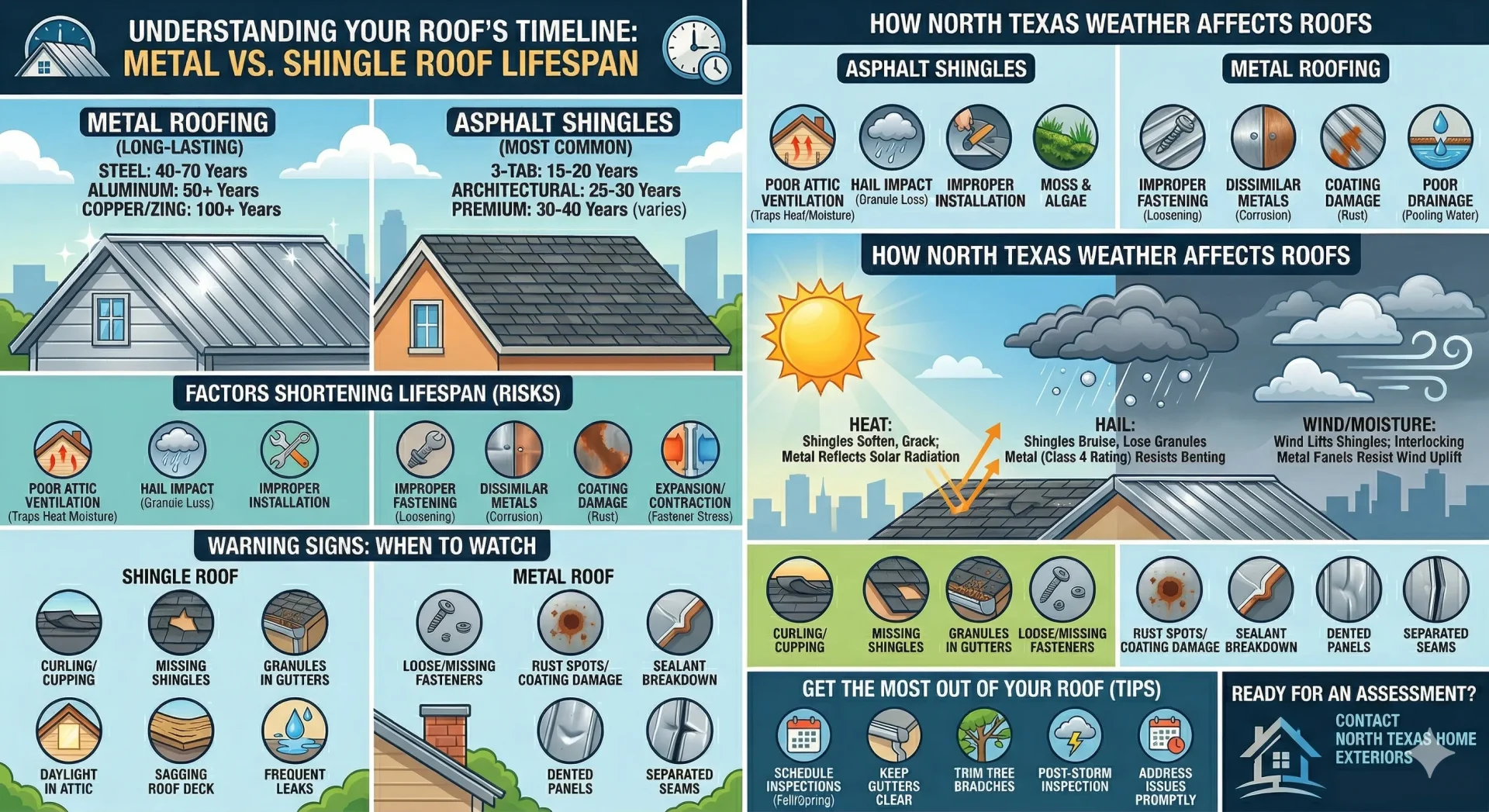
- Steel roofing: Typically lasts 40 to 70 years, depending on the gauge, coating quality, and installation method
- Aluminum roofing: Often lasts 50 years or more, with natural corrosion resistance that holds up well in humid and storm-prone environments
- Copper and zinc roofing: Can last well over 100 years in the right conditions, though these are less common in residential applications
What makes metal roofing stand out is its consistency. Unlike other materials that degrade gradually and quietly, metal roofs tend to maintain their structural integrity for decades before showing meaningful signs of wear. A well-maintained metal roof installed today could still be performing reliably when the next generation of homeowners takes over the property.
If the cost of that long-term durability is something you are weighing, Is a Metal Roof Worth the Cost Over Shingles? breaks down the full financial picture in detail.
How Long Does an Asphalt Shingle Roof Last?
Asphalt shingles are the most installed roofing material in the United States, and their lifespan is generally reliable under normal conditions. However, performance can vary significantly based on climate, installation quality, and how well they are maintained.
Here is a general breakdown:
- 3-tab asphalt shingles: Average lifespan of 15 to 20 years. These are the thinnest and most basic shingle options.
- Architectural (dimensional) shingles: Average lifespan of 25 to 30 years. Thicker and more durable than 3-tab options.
- Premium shingles: Some high-end products are rated up to 30 to 40 years, though real-world performance in harsh climates often falls short of those ratings.
In North Texas, heat is a significant factor. Extended periods of intense UV exposure accelerate granule loss, which is one of the primary ways asphalt shingles age. Once granules wear away, the underlying asphalt becomes exposed and begins breaking down faster. Homeowners in North Richland Hills often find that shingle roofs require more attention and earlier replacement than homeowners in milder climates.
What Shortens a Roof’s Lifespan Faster Than Normal?
Understanding what accelerates roof aging helps homeowners take preventive action before small issues turn into costly repairs. Both metal and shingle roofs can have their lifespans shortened by the same general categories of risk.
For Asphalt Shingles:
- Poor attic ventilation traps heat and moisture, which degrades shingles from the inside out
- Hail impact breaks down the granule surface and weakens the shingle structure
- Improper installation leaves gaps, exposed nails, or insufficient overlap, which allows water infiltration
- Moss and algae growth retain moisture against the shingle surface, accelerating deterioration
- Debris buildup from leaves and branches creates standing moisture that softens and damages shingles over time
For Metal Roofing:
- Improper fastening during installation can cause panels to loosen over time, especially under high winds
- Dissimilar metals in contact with each other can cause galvanic corrosion if not properly separated
- Scratches or chips in the protective coating, if left unaddressed, can allow rust to develop on steel panels
- Poor drainage design that allows water to pool around seams can reduce performance over time
- Expansion and contraction from temperature changes can stress fasteners and seams on older systems
Knowing these risk factors helps you have more informed conversations with roofing professionals and ask the right questions when scheduling inspections.
How North Texas Weather Affects Roof Lifespan
The climate in North Richland Hills and the broader DFW area is genuinely demanding for roofing materials. Summers are long and brutally hot. Severe storms can arrive quickly and bring hail, high winds, and heavy rain. Understanding how local weather interacts with each roofing material is important for setting realistic expectations.
According to roofing material performance standards from the National Roofing Contractors Association, roofing systems in high-UV, high-impact climates should be selected with regional weather patterns in mind, not just general manufacturer ratings.
How heat affects each material:
- Asphalt shingles absorb heat, which causes the asphalt to soften, expand, and contract repeatedly. Over time, this thermal cycling breaks down the shingle’s flexibility and leads to cracking.
- Metal roofing handles heat differently. It reflects a significant portion of solar radiation and expands and contracts in a controlled way when properly installed with thermal movement in mind.
How hail affects each material:
- Shingles can suffer significant granule loss and surface cracking from hail impact. Even hail that does not cause an immediate leak can shorten the remaining lifespan of a shingle roof.
- Metal roofs with a Class 4 impact resistance rating are specifically engineered for hail-prone regions. They resist denting and surface damage far better than standard asphalt shingles.
How moisture and wind affect each material:
- Wind can lift shingles at the edges and expose the underlayment to water infiltration. Once water gets under a shingle, the damage spreads quickly.
- Metal roofing panels interlock and are anchored in ways that resist wind uplift. Properly installed metal roofs perform well in high-wind events.
Signs That a Shingle Roof Is Nearing the End of Its Lifespan
Knowing what to watch for helps you plan ahead rather than react to an emergency. Here are the most common indicators that a shingle roof is approaching replacement:
- Curling or cupping shingles: The edges or centers of shingles begin to turn upward, which signals age-related drying and shrinkage.
- Missing shingles: Gaps in the roof surface allow water and debris to reach the underlayment directly.
- Granules in the gutters: Heavy granule buildup in gutters after rain is a reliable indicator that shingles are breaking down.
- Daylight visible in the attic: If light comes through the roof boards when inspecting the attic, water can too.
- Sagging roof deck: A soft or uneven roofline often points to structural damage caused by prolonged moisture exposure.
- Frequent leaks: If repairs are becoming a recurring issue, the roof may be telling you it is time for a full replacement rather than another patch.
Routine inspections are essential for identifying early warning signs of system failure before they turn into costly repairs.
Signs That a Metal Roof Needs Attention
Metal roofs require far less frequent attention than shingles, but they are not completely maintenance-free. Here is what to inspect periodically:
- Loose or missing fasteners: Screws and fasteners can back out over time, especially on exposed-fastener systems. This is one of the most common issues with aging metal roofs.
- Rust spots or coating damage: Any area where the protective coating has been scratched or chipped should be addressed before corrosion develops beneath the surface.
- Sealant breakdown around penetrations: Areas around vents, chimneys, and skylights rely on sealant that can degrade over time and need reapplication.
- Dented panels from impact: While metal handles hail well, very large hail can leave dents. Dents do not always affect performance, but should be documented for insurance purposes.
- Separated seams: On standing seam systems, inspect the seams annually to confirm they remain tight and watertight.
If you want to start with a broader understanding of how the two materials compare overall, Shingle Roof vs. Metal Roof: Which Is Best for Your Home? provides the full side-by-side overview.
How to Get the Most Out of Either Roof Type
Regardless of which roofing material you have, consistent care extends its useful life and reduces the chance of unexpected repair costs.
Tips that apply to both roofing types:
- Schedule a professional roof inspection at least once a year, ideally in the fall before storm season or in the spring after it
- Keep gutters clear of debris to prevent water from backing up against the roof edge
- Trim overhanging tree branches that could fall or deposit leaves and moisture on the roof surface
- After any significant storm, have a qualified roofing professional conduct a thorough inspection before filing or dismissing an insurance claim
- Address small issues promptly. A minor repair handled early almost always costs far less than allowing damage to spread
Most exterior home system failures begin with minor issues that are often overlooked, making regular maintenance and early intervention essential for extending overall system lifespan.
For homeowners in North Richland Hills who are noticing early signs of wear or are simply wondering whether their roof is reaching the point where a switch to metal makes sense, When Is It Time to Switch From Shingles to Metal? covers the specific signals and scenarios to watch for.
Understanding Your Roof’s Timeline Matters
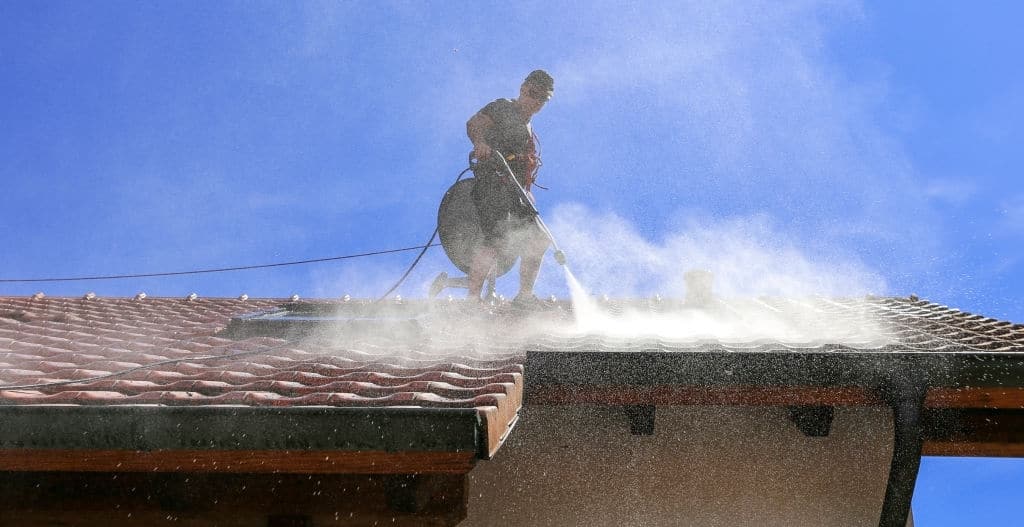
Every roof has a lifespan, and every homeowner benefits from understanding where their roof stands in that timeline. Whether you have an aging shingle roof that is starting to show its years or a metal roof that just needs a routine check, staying informed is the best way to protect one of the most important investments in your home.
When you are ready to get a professional assessment of your roof’s condition, North Texas Home Exteriors is here to help. We work with homeowners throughout the North Richland Hills area to evaluate roofing performance, identify issues early, and recommend solutions that make sense for the long term. Contact us or give us a call to schedule your inspection and get honest answers from a team that knows roofing.