When homeowners start thinking about roof replacement, the first question that usually comes up is the cost. A metal roof costs more upfront than asphalt shingles, and that gap can feel significant when you are already dealing with a major home project. But the real question is not just what you pay today. It is what you get back over time.
For homeowners in North Richland Hills, TX, where extreme heat, hailstorms, and severe weather are part of life, the value of a roof goes beyond the initial price tag. This article breaks down the true financial picture of metal roofing versus shingles so you can decide whether the investment actually makes sense for your home and your budget.
Understanding the Real Cost Difference Between Metal and Shingles
Before comparing values, it helps to understand what drives the cost difference between the two materials.
Asphalt shingles are widely available and faster to install, which keeps labor and material costs lower. Metal roofing involves more precise fabrication, specialized installation techniques, and higher-grade materials, all of which contribute to a higher upfront cost.
Here is what drives the cost gap:
- Material quality: Metal panels and shingles are engineered for decades of performance. Standard asphalt shingles are designed for a shorter service life.
- Installation complexity: Metal roofing requires trained professionals with specific experience. Improper installation can void warranties and reduce performance.
- System components: Metal roofing systems often include underlayment, coatings, and fastening systems that add to the total cost but also improve longevity.
The upfront cost of metal roofing is higher; there is no getting around that. But cost and value are two different things. If you are still weighing the overall differences between the two materials, the full breakdown is covered in Shingle Roof vs. Metal Roof: Which Is Best for Your Home?.
How Long Each Roof Lasts and Why It Matters for Your Wallet
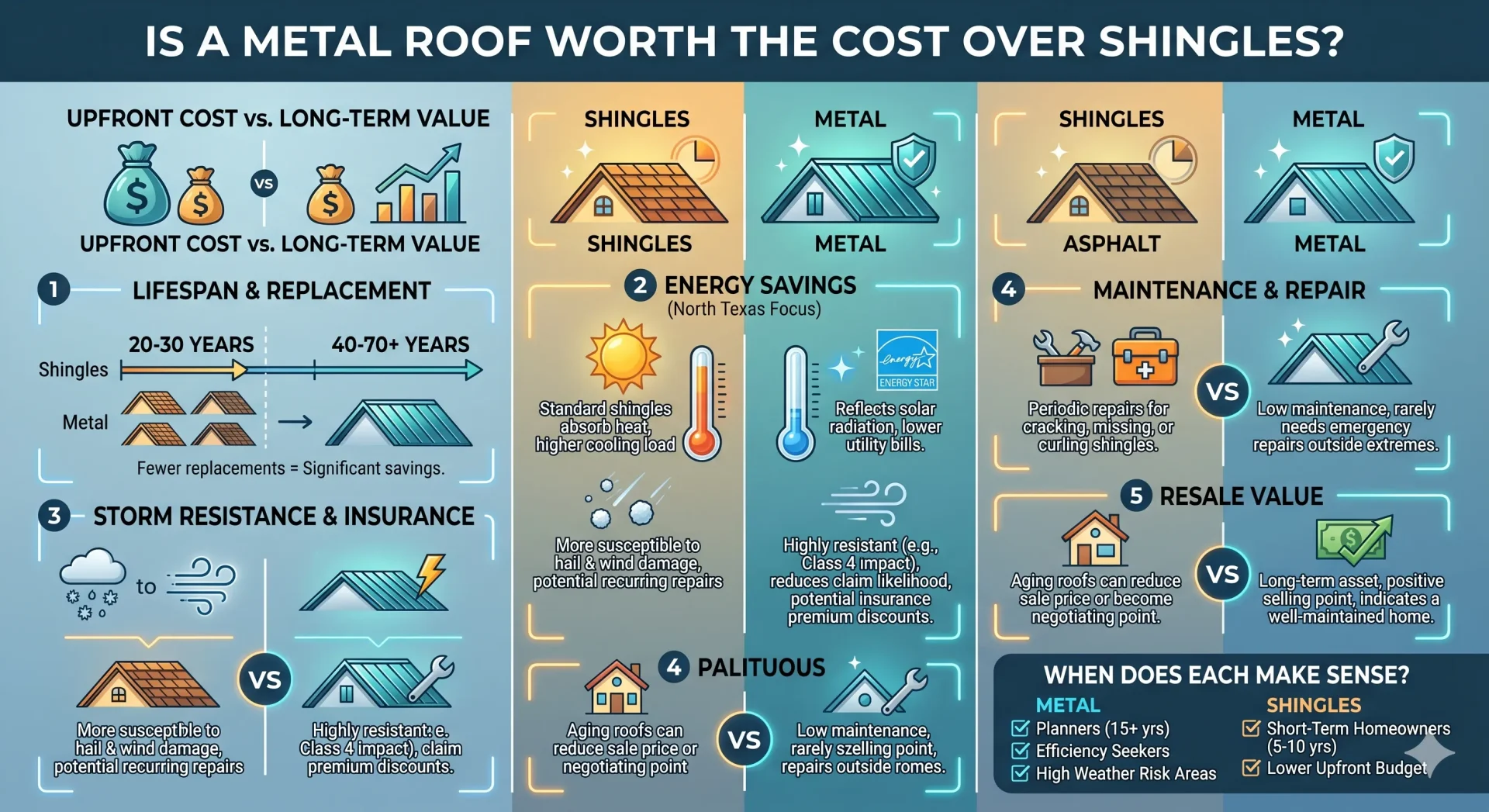
The lifespan of a roof is one of the most important factors in calculating its true value. A roof that lasts twice as long is not just more durable. It also means fewer replacements, fewer repair bills, and less disruption to your life.
Asphalt Shingles:
- Typical lifespan ranges from 20 to 30 years
- In North Texas heat and hail conditions, shingles often show wear closer to the lower end of that range
- Homeowners may need one or two full replacements over the life of their home
Metal Roofing:
- Typical lifespan ranges from 40 to 70 years, depending on the material and maintenance
- Performs consistently in high-heat, high-wind, and hail-prone environments
- Many homeowners never need to replace a metal roof again after installation
When you factor in the cost of replacing shingles two or even three times over the same period that a metal roof is still performing, the financial comparison shifts considerably. The higher upfront investment starts to look more reasonable when spread across decades.
Energy Savings: Can a Metal Roof Lower Your Monthly Bills?
One of the most practical financial benefits of metal roofing is its impact on energy costs, especially in a climate like North Richland Hills, where summer temperatures regularly climb well above 90 degrees.
How metal roofing reduces energy costs:
- Metal reflects solar radiation instead of absorbing it, which reduces the amount of heat transferred into your home
- Many metal roofing products carry ENERGY STAR certification, meaning they meet federal standards for energy efficiency
- Reduced heat absorption means your air conditioning system works less during peak summer months
- Lower cooling loads translate directly into lower monthly utility bills
How shingles compare:
- Standard asphalt shingles absorb more heat, which raises attic temperatures and increases cooling demand
- Reflective shingle options exist, but typically cost more and still do not perform at the same level as metal
- Energy savings from shingles are generally modest compared to metal roofing systems
For homeowners who plan to stay in their home long-term, these monthly savings add up. Over 10 to 15 years, the cumulative reduction in energy costs can offset a meaningful portion of the original installation investment.
Material selection plays a major role in long-term cost, as higher-quality materials often deliver better durability and value over time.
Insurance Discounts and Storm Resistance: A Financial Benefit Many Homeowners Overlook
One area where metal roofing offers financial value that often gets overlooked is homeowner’s insurance. Because metal roofs are significantly more resistant to hail, wind, and fire, many insurance providers offer premium discounts for homes with qualifying metal roofing systems.
What to know about insurance savings:
- Metal roofs with a Class 4 impact resistance rating are recognized by many insurers as a lower risk
- Homeowners in hail-prone areas like North Richland Hills may qualify for meaningful annual premium reductions
- Fire-resistant metal roofing can also influence premiums in areas where fire risk is a concern
- Fewer storm-related claims over time can help keep your insurance rates stable
According to independent roofing cost and performance data, impact-resistant roofing materials consistently show lower claim rates compared to standard asphalt shingles in severe weather regions.
It is worth contacting your insurance provider before making a final roofing decision. In some cases, the annual savings on premiums alone can add up to a significant amount over the life of a metal roof.
Home Resale Value: Does a Metal Roof Help When You Sell?
If there is any chance you will sell your home in the future, the roofing material you choose today can affect what buyers are willing to pay tomorrow.
What metal roofing does for resale value:
- Buyers view a metal roof as a long-term asset that reduces their near-term maintenance concerns
- A relatively new metal roof signals that the home has been well-maintained and upgraded
- Real estate professionals often note that metal roofing is a positive selling point, especially in markets where weather damage is common
- Some estimates suggest metal roofing can return a significant portion of its cost at resale, though the exact amount varies by market and condition
What shingles mean for resale:
- An aging shingle roof can become a negotiating point that reduces your final sale price
- Buyers may request credits or a price reduction if the shingle roof is near the end of its lifespan
- A newer shingle roof is a neutral factor, while a metal roof tends to be viewed as a positive upgrade
In a competitive real estate market, having a durable, low-maintenance roof already in place is a genuine advantage.
Repair Costs Over Time: Which Roof Costs Less to Maintain?
Beyond replacement and energy costs, ongoing maintenance and repair expenses are part of the true cost of any roofing system.
Shingle roof repair considerations:
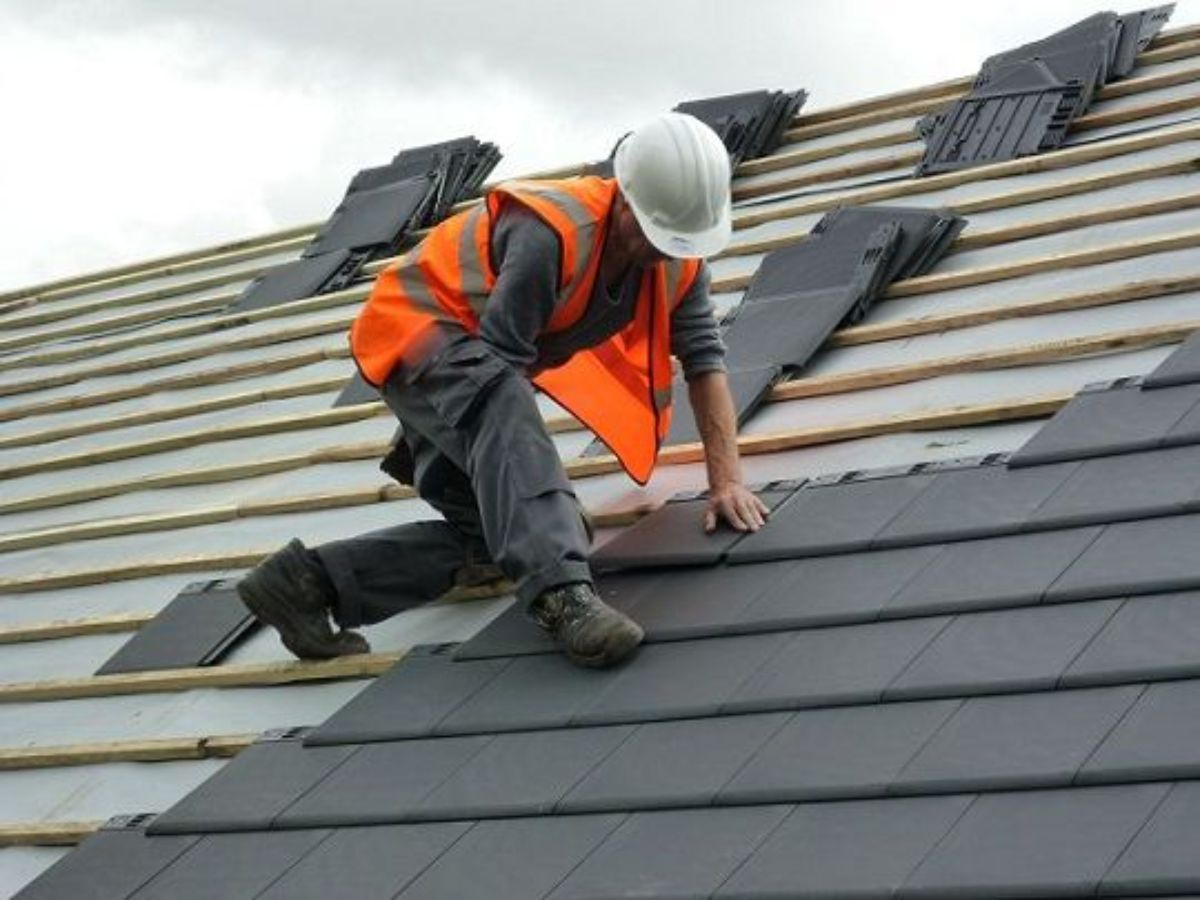
- Shingles can crack, curl, or go missing after storms, requiring periodic repairs
- Granule loss accelerates with age and UV exposure, which can lead to more frequent service calls
- Flashing and sealant around vents and chimneys may need attention every few years
- In North Texas weather, storm-related repairs can be a recurring expense
Metal roof repair considerations:
- Metal roofs rarely need emergency repairs outside of extreme circumstances
- Fasteners and seams should be inspected periodically, but typically hold up well for many years
- Scratches or coating chips should be addressed early to prevent any corrosion from developing
- Overall, repair frequency is significantly lower compared to asphalt shingles
Routine tune-ups and inspections help ensure all components remain in good working condition, reducing the likelihood of unexpected failures and extending overall system performance.
To understand the full picture of how each material holds up through its service life, What to Expect From Metal vs. Shingle Roof Lifespan provides a detailed side-by-side look at long-term performance.
When the Numbers Actually Make Sense for a Metal Roof
Metal roofing is not the right financial decision for every homeowner in every situation. Here is a straightforward guide to help you assess whether the investment makes sense for you.
Metal roofing makes strong financial sense if:
- You plan to stay in your home for 15 or more years
- Your current shingle roof is already aging and approaching replacement
- You want to reduce recurring maintenance and repair expenses
- Energy efficiency and lower utility bills are important to your household
- You live in an area with frequent hail, high winds, or extreme heat, which applies directly to homeowners in North Richland Hills
Shingles may still be the better financial choice if:
- You plan to sell your home within the next five to ten years
- Your budget requires a lower upfront investment right now
- Your current roof still has significant life remaining and only needs minor repairs
Knowing where you are in your homeownership journey matters when making this decision. If you are already noticing signs that your current roof may be reaching the end of its service life, When Is It Time to Switch From Shingles to Metal? can help you identify whether now is the right time to make the move.
Is a Metal Roof the Smarter Investment for Your Home?
The upfront cost of a metal roof is real, and it is not something to dismiss. But when you look at the full financial picture, including lifespan, energy savings, reduced repair costs, potential insurance discounts, and resale value, the investment often delivers strong returns over time. For homeowners in North Richland Hills who deal with demanding weather year after year, those returns are even more meaningful.
At North Texas Home Exteriors, we help homeowners across the North Richland Hills area make confident roofing decisions based on their specific needs, budget, and long-term goals. If you are ready to explore whether a metal roof is the right investment for your home, contact us or give us a call to speak with a roofing professional who can walk you through your options.