Choosing a roof is one of the biggest decisions a homeowner can make, especially when you are facing a roof replacement. Whether your current roof is aging, damaged by storms, or simply reaching the end of its lifespan, the material you choose now will affect how long your next roof lasts, how much it costs over time, and how well it handles the weather. It protects everything inside your home, making this decision one you want to get right the first time.
If you live in North Richland Hills, TX, you already know the weather here is no joke. Hot summers, strong storms, and the occasional hail make it important to choose a roofing material that can actually hold up. This guide breaks down everything you need to know about shingle roofs and metal roofs so you can make a smart, confident decision for your home.
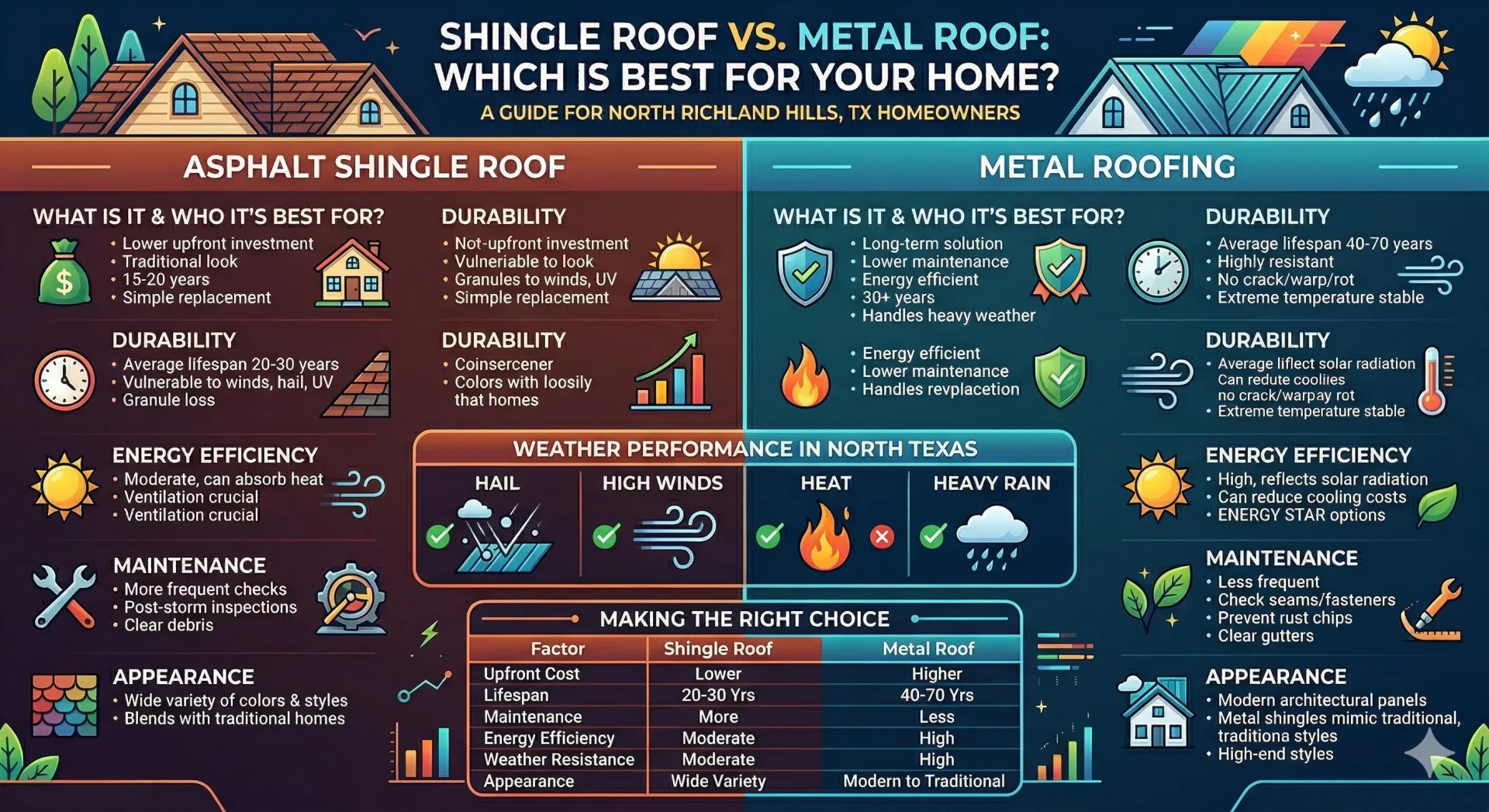
What Is a Shingle Roof and Who Is It Best For?
Asphalt shingles are the most widely used roofing material in the United States. They are made of a fiberglass base coated with asphalt and topped with mineral granules. They come in a wide range of colors and styles, which makes them a flexible choice for most home designs.
Shingle roofs work well for homeowners who:
- Want a lower upfront investment for roof installation
- Are planning to stay in their home for 15 to 20 years
- Prefer a traditional look that blends in with most neighborhoods
- Need a straightforward replacement that most roofing professionals can handle
One thing to keep in mind with shingles is that they require more regular inspection, especially after hail or strong windstorms. In areas like North Richland Hills, where severe weather is common, granule loss and lifted shingles can become issues over time if left unchecked.
If you are already comparing costs and wondering whether the upgrade to metal is financially worth it, check out Is a Metal Roof Worth the Cost Over Shingles? for a deeper breakdown of the numbers.
What Is a Metal Roof and Who Is It Best For?
Metal roofing has grown significantly in popularity over the last decade, and for good reason. It is available in several materials, including steel, aluminum, and copper, and it comes in both standing seam panels and metal shingles designed to mimic traditional styles.
Metal roofs work well for homeowners who:
- Want a long-term roofing solution that requires less maintenance
- Are focused on energy efficiency and reducing cooling costs
- Live in areas with heavy rain, hail, or high winds
- Plan to stay in their home for 30 years or longer
Metal roofs reflect heat rather than absorbing it, which can make a noticeable difference in your energy bills during Texas summers. They are also impact-resistant, which is a major plus for homeowners in North Richland Hills, where hail is a real seasonal concern.
Durability: How Well Does Each Roof Hold Up?
When it comes to durability, the two materials are not in the same league. Here is a straightforward comparison:
Asphalt Shingles:
- Average lifespan of 20 to 30 years with proper maintenance
- Vulnerable to strong winds, hail impact, and UV damage over time
- Granule loss is a common sign of aging and wear
- May need repairs more frequently in harsh weather climates
Metal Roofing:
- The average lifespan is 40 to 70 years, depending on the material
- Highly resistant to wind, hail, fire, and moisture
- Does not crack, warp, or rot like other roofing materials
- Holds up well in extreme temperature changes
For homeowners in North Texas, durability is not just a preference; it is a necessity. The region sees everything from scorching summer heat to winter ice storms. A roof that can handle both extremes without frequent repairs is worth serious consideration.
To understand more about how each material performs over the years, read What to Expect From Metal vs. Shingle Roof Lifespan for a full side-by-side comparison.
Energy Efficiency: Which Roof Keeps Your Home Cooler?
Energy efficiency is becoming one of the top reasons homeowners in Texas are switching roofing materials. Here is how each option performs:
Shingle Roofs:
- Standard asphalt shingles absorb heat, which can drive up indoor temperatures
- Reflective or “cool roof” shingles are available, but come at a higher cost
- Ventilation plays a major role in how well a shingle roof manages heat
Metal Roofs:
- Metal naturally reflects solar radiation, which helps reduce heat absorption
- Many metal roofing systems are ENERGY STAR certified
- Can reduce cooling costs noticeably during long, hot summers
If you are deciding between the two based purely on long-term energy savings, metal roofing tends to have a stronger case in warmer climates.
Maintenance: What Does Each Roof Require?
No roof is completely maintenance-free, but the level of upkeep varies quite a bit between shingles and metal.
Shingle Roof Maintenance Tips:
- Inspect your roof at least twice a year, ideally in spring and fall
- Check for missing, cracked, or curling shingles after every major storm
- Clear debris from the roof surface and gutters regularly
- Watch for dark streaks, which may indicate algae or moss growth
- Have a roofing professional check flashing around chimneys and vents
Metal Roof Maintenance Tips:
- Inspect seams and fasteners annually to check for any loosening
- Check for scratches or chips in the coating that could lead to rust over time
- Keep gutters clear to prevent water from backing up under the panels
- Inspect areas around penetrations such as vents and skylights
The Door & Access Systems Manufacturers Association emphasizes that routine inspection and maintenance practices are key to preventing long-term structural issues in exterior home systems.
Both roof types benefit from regular professional inspections. Catching small issues early is the most effective way to avoid costly repairs later. If you notice signs of wear on your current roof and are wondering whether it is time for an upgrade, When Is It Time to Switch From Shingles to Metal? covers the key warning signs to watch for.
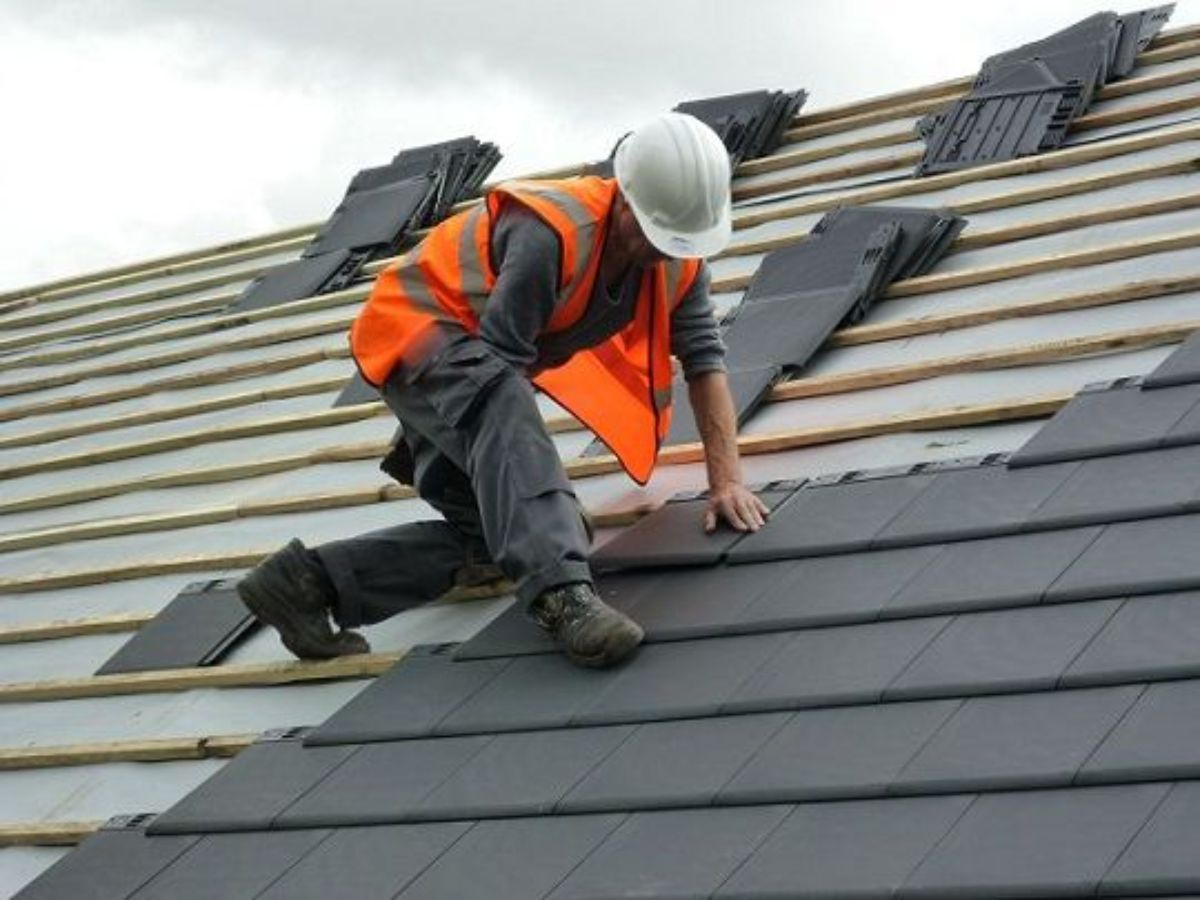
Appearance: Which Roof Looks Better on a Home?
Curb appeal matters, and your roof is one of the first things people notice. Here is how each option stacks up visually:
Asphalt Shingles:
- Available in a wide variety of colors, textures, and styles
- Can mimic the look of wood shake or slate at a lower cost
- Blends naturally with most traditional and suburban home designs
- Easy to match if a section needs to be replaced
Metal Roofing:
- Modern standing seam panels give a clean, architectural look
- Metal shingles can replicate the appearance of traditional roofing materials
- Available in a growing range of colors and finishes
- Tends to complement contemporary, farmhouse, and high-end home styles
The right choice depends on your home’s architecture and the look you want to achieve. In neighborhoods across North Richland Hills, both styles are common, so there is no wrong answer aesthetically. It really comes down to personal preference and the overall design of your home.
Weather Performance in North Texas: Which Roof Holds Up Better?
North Richland Hills and the surrounding DFW area experience some of the most unpredictable weather in the country. Choosing a roof that can handle local conditions is essential.
What to Watch For in North Texas Weather:
- Hail: One of the biggest threats to roofing in this region. Metal roofs with Class 4 impact ratings handle hail significantly better than standard shingles.
- High Winds: Both materials can be rated for high wind resistance, but metal standing seam systems tend to outperform shingles in severe wind events.
- Heat: Extended periods of 95 to 105 degree heat can accelerate shingle aging. Metal holds up better under sustained UV exposure.
- Heavy Rain: Metal sheds water quickly and efficiently. Shingles depend heavily on proper installation and granule integrity to manage runoff.
For homeowners replacing a roof after storm damage, understanding how each material performs under local conditions can help prevent the same issues from happening again.
ULSE emphasizes that material performance and compliance with safety standards are critical factors in protecting homes from severe weather conditions.
Making the Right Choice for Your Home
There is no single right answer when comparing shingle roofs and metal roofs. The best choice depends on your budget, how long you plan to stay in your home, the climate challenges in your area, and what you value most in a roof.
Here is a quick summary to help you decide:
Factor | Shingle Roof | Metal Roof |
Upfront Cost | Lower | Higher |
Lifespan | 20 to 30 years | 40 to 70 years |
Maintenance | More frequent | Less frequent |
Energy Efficiency | Moderate | High |
Weather Resistance | Moderate | High |
Appearance Options | Wide variety | Modern to traditional |
If long-term value, durability, and lower maintenance are your priorities, metal roofing is worth the investment. If you need a cost-effective solution with a faster installation timeline, asphalt shingles remain a reliable and widely available option.
Ready to Make the Right Call for Your Roof?
Choosing between a shingle roof and a metal roof is not just about the material. It is about choosing something that fits your home, your budget, and the climate you live in. Homeowners in North Richland Hills deal with real weather challenges, and the right roof can make a significant difference in how protected and comfortable your home feels year after year.
When you are ready to take the next step, North Texas Home Exteriors is here to help. Our team works with homeowners across the North Richland Hills area to assess their roofing needs and recommend the right solution for their specific situation. Contact us or give us a call to schedule your roof inspection and get expert guidance you can trust.